Editorial Essay
Does China Have Unions? Inside the ACFTU System
- Published
- September 17, 2026
- Read Time
- 7 min read
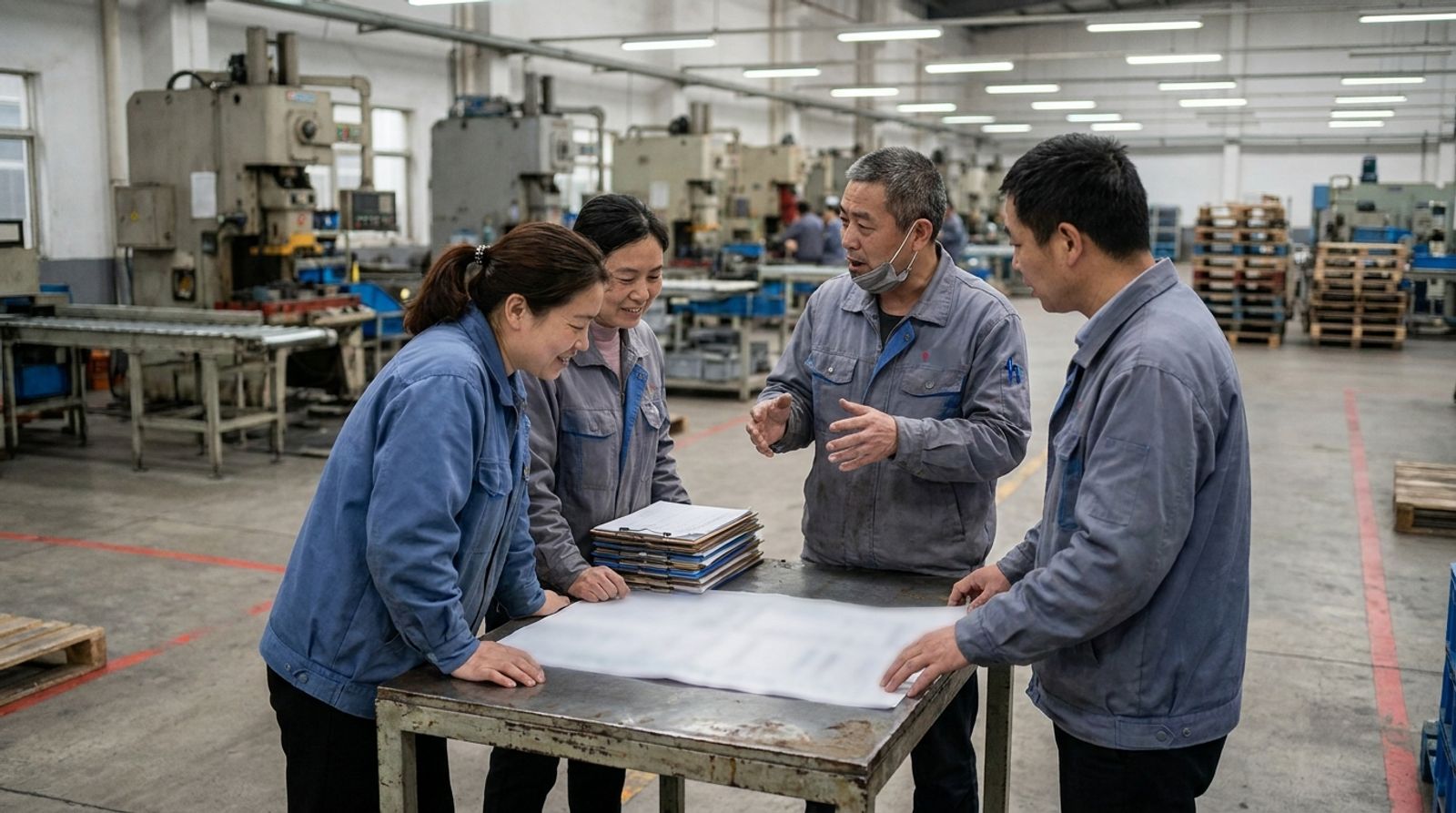
China's official union, the ACFTU, isn't independent — but on Guangdong's shop floors, plant-level bargaining is real. Here's how the system actually works.
Does China have trade unions? Yes — it has the largest union body in the world. Does it have independent trade unions in the Western sense — free of the Communist Party, able to call an adversarial strike, competing with rival federations for members? No. Every legal union in China sits inside the All-China Federation of Trade Unions (ACFTU), which the Party leads directly. But “independent or not” is a narrower question than it looks, and it's the wrong one to stop at. The fieldwork behind Dialectics of Chinese Labor points to a more specific and more useful question: does this arrangement give workers real leverage anyway? On the shop floors of Guangdong, the answer is often yes — uneven, informal, and nothing like collective bargaining as it's practiced in Detroit or Düsseldorf, but real.
Search for trade unions in China and you'll find plenty of surface-level answers, but most conflate two different questions: whether China trade unions exist at all (they do, extensively) and whether they're independent (they aren't). The real state of Chinese labour sits between those two answers — and that gap is what this piece is actually about.
What the ACFTU Actually Is
The ACFTU is not a labor union in the pluralist sense of the word — it's a state institution. Founded to organize workers under Party leadership rather than to negotiate against the state, it has no legal rivals: independent, unaffiliated unions are not permitted to organize workplaces. Every factory-floor union committee, every sector-level federation, and every provincial branch reports up through the same structure, with the Party's interests embedded at every level (Ness, Dialectics of Chinese Labor, ch. 1, on the party–union alliance within a transitional state).
That single fact is where most Western commentary stops — and where it should start. Dialectics of Chinese Labor tracks something that runs against the standard story: while union density and collective bargaining power have collapsed across most of the capitalist world since the 1970s, the ACFTU has grown, both in raw membership and in the scope of what it's expected to do (Ness, Dialectics of Chinese Labor, ch. 3, “Global Trade Union Decline, 1975–2025”). One concrete marker of that growth: labor disputes brought before China's official arbitration committees rose from 8,150 in 1992 to roughly 1,280,000 by 2010 (Freeman 2015; Ness, Dialectics of Chinese Labor, pp. 12, 205).
Why “Independent” Is the Wrong Frame
Judging the ACFTU against a Western template — can it strike against the state, can workers choose a rival union — produces a flat “no” and stops the analysis there. The more useful question is what leverage workers actually have inside this specific arrangement — and Shifts in Guangdong's Industrial Zones makes that case in full, using the province's recent wave of informal work stoppages.
The mechanism worth naming plainly: an informal stoppage creates a problem for the local union committee and, above it, the local Party apparatus, because the union's legitimacy rests on being seen to represent workers even though it can't act as an adversarial party to the employer the way a Western union would. That produces a specific kind of leverage — not the strike-and-negotiate cycle of a capitalist labor movement, but pressure that gets absorbed and, sometimes, addressed.
Where the ACFTU Is Actually Expanding
The clearest evidence that this isn't a static or purely symbolic institution is where the ACFTU has been extending itself: into China's floating population of internal migrants, and — more recently — into platform and gig work. In 2022, the ACFTU chartered its first formal union branches for food-delivery riders in Shanghai, workers dispatched algorithmically for Meituan and Ele.me who had been organizing informally through WeChat groups for years before the union gave that organizing formal status. Organizing China's Delivery Workers covers this case in more detail — it's too early to call it a template, but it's a live counter-example to the assumption that platform work is inherently beyond organizing, in China or anywhere else.
The same expansion logic runs backward into older ground too. State owned enterprises China modernized since the 1990s remain the ACFTU's original and still-largest base — membership there hasn't shrunk as growth shifts toward migrants and platform workers.
That expansion tracks two of the book's core chapters: migration and the representation of floating labor, and the specific challenge of organizing digital-economy workers who don't share a single physical workplace. (Ness, Dialectics of Chinese Labor, chs. 4–5, on migrant and platform-worker organizing).
What Western Coverage Gets Wrong
The image of the Chinese worker as passive or purely instrumentalized by the party-state is durable in Western labor writing, and it doesn't survive contact with the actual record. China Labour Bulletin's own strike map — the same organization that, ironically, ranks for most of the search terms this article targets — logs thousands of collective actions a year, from short wage disputes to sustained campaigns in logistics and platform work. The Myth of the Passive Worker makes this case at length. The mistake isn't citing the ACFTU's Party leadership — that's simply accurate. The mistake is treating Party leadership and worker passivity as the same fact. They aren't.
China workers rights coverage in Western outlets tends to swing between two extremes — state media claiming full protection, activist accounts claiming none at all. Neither survives contact with the strike data above.
Quick Answers
Does China allow independent trade unions?
No. Chinese law does not permit unions organized outside the ACFTU structure. All legal unions are affiliated with it, and the ACFTU is led by the Communist Party.
What is the ACFTU?
The All-China Federation of Trade Unions is China's sole legal trade union federation and the largest union body in the world by membership. It operates through national, provincial, and enterprise-level branches under Party leadership.
Can Chinese workers go on strike?
There is no legally protected right to strike in China, and the ACFTU does not organize strikes against employers. In practice, informal work stoppages happen regularly and are one of the main ways workers create pressure that plant-level union committees and local officials respond to.
Is the ACFTU the same as a union in the US or Europe?
No. Western unions are typically independent of the state and organize collective bargaining and strikes against employers. The ACFTU is a state institution whose role is closer to representation-within-the-system than adversarial bargaining — though the fieldwork behind Dialectics of Chinese Labor finds that this still produces real, if uneven, leverage for workers in specific cases.
Is ACFTU membership actually growing?
Union membership and workplace representation have expanded in China even as union density has fallen across most of the capitalist world since the 1970s (Ness, Dialectics of Chinese Labor, ch. 3).
Is there a specific name for the China union system?
Yes — it's the All-China Federation of Trade Unions. In casual use it's sometimes called the China union, the China labor union, or the China trade union, though none of those are official names.
Further Reading
For the short-answer version, see What is the All-China Federation of Trade Unions (ACFTU)? on the FAQ page. For the broader argument this piece builds on, see Shifts in Guangdong's Industrial Zones, Organizing China's Delivery Workers, and The Myth of the Passive Worker. The full argument is in Dialectics of Chinese Labor: Trade Unions under Market Socialism, open access from Brill. For primary data on the strikes and disputes referenced throughout, see China Labour Bulletin's Strike Map and the ILOSTAT China country profile.
About the Author

Immanuel Ness is Distinguished Professor of Sociology at the University of Johannesburg and author of Dialectics of Chinese Labor.