Editorial Essay
Shifts in Guangdong's Industrial Zones
- Published
- October 11, 2024
- Read Time
- 2 min read
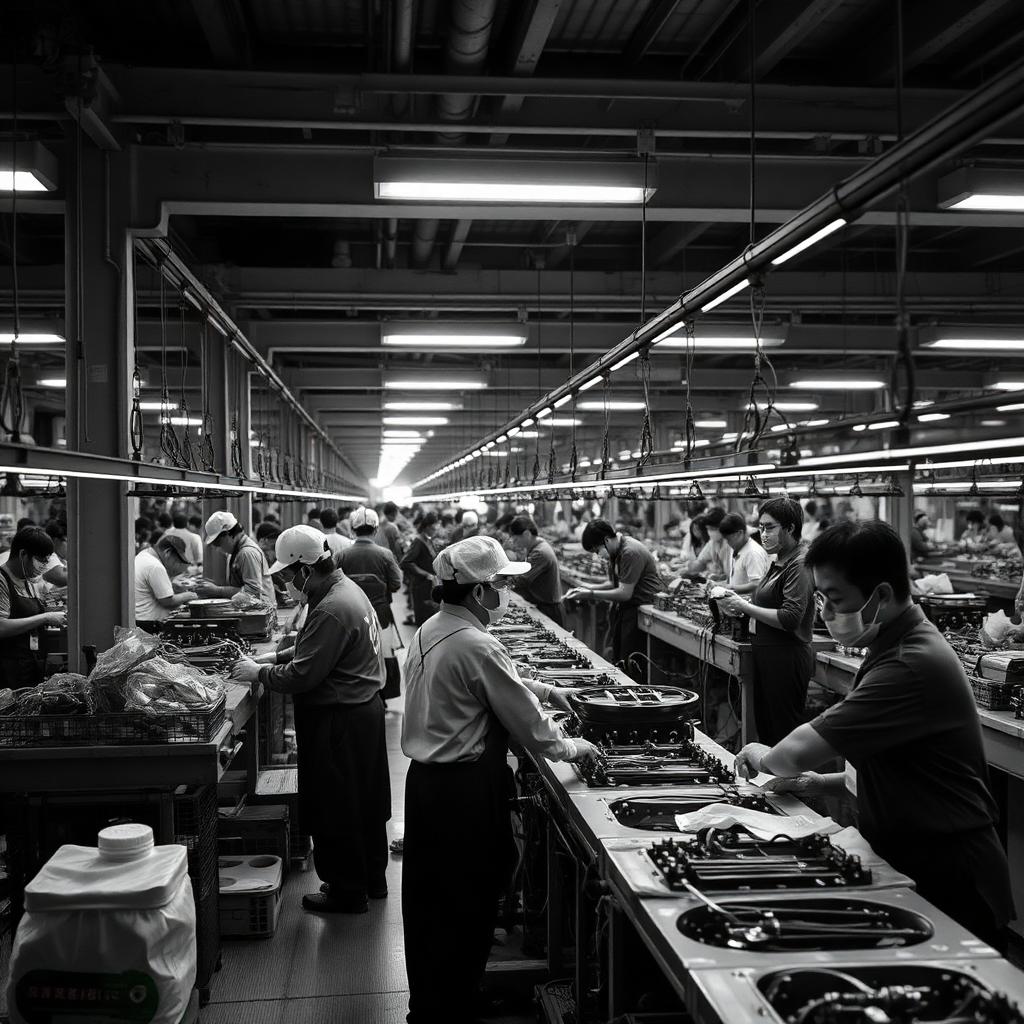
An analysis of the recent wildcat strikes and how the ACFTU has responded to changing conditions on the factory floor.
Guangdong's export-manufacturing belt has been the front line of Chinese labor struggle for three decades. What is happening there now is not a return to the classical wildcat pattern of the 2010s, but a slower, more diffuse form of pressure on employers — one that the All-China Federation of Trade Unions (ACFTU) has learned to absorb rather than repress.
The Scale of the Pressure
The scale of that pressure is documented in the historical record. Labor disputes brought before China's official arbitration committees rose from 8,150 in 1992 to 135,206 in 2000, and roughly 1,280,000 by 2010. That was the same year a strike by Honda workers in Guangdong produced a collective agreement with improved pay and benefits, two years before a 2014 strike by 40,000 workers at a Dongguan athletic-shoe factory drew international attention to the province's industrial belt (Freeman 2015; Ness, Dialectics of Chinese Labor, pp. 12, 205).
The evidence gathered for Dialectics of Chinese Labor suggests that plant-level union committees, once dismissed as ornamental, are increasingly drawn into wage bargaining after informal work stoppages. This is not Western-style collective bargaining, but it is not the passive company unionism that Anglophone commentary has long assumed either (see Ness, Dialectics of Chinese Labor, ch. 6, pp. 145–153, on work stoppages and arbitration outcomes).
Independence Isn't the Right Question
The interesting question is not whether the ACFTU is 'independent' — it is not, and does not claim to be — but whether the state's own commitments to a socialist labor regime give workers leverage that they lack in comparable capitalist economies. On the shop floors of Dongguan and Shenzhen, that leverage is real, uneven, and growing.
The same dynamic is visible well beyond manufacturing — see Organizing China's Delivery Workers for how platform companies are being drawn into a similar arrangement with their own workforce, and The Myth of the Passive Worker for the broader evidence against reading Chinese labor quiescence at face value.
About the Author

Immanuel Ness is Distinguished Professor of Sociology at the University of Johannesburg and author of Dialectics of Chinese Labor.